News & Updates
Recent Blog Posts
Discovering Confidence: Advice from a Certified Life Coach
By: Sue Hurwitz
Like many other flutists, I’ve had the experience of being so nervous in performances that my mouth felt like it was full of cotton—making it nearly impossible to find my embouchure!
I know firsthand what it’s like to get up in front of people and think, “Why am I doing this to myself?!” Over time, as I gained more experience and insights, I came to realize that the audience was actually on “my side.” They weren’t there to judge me, they were there to have an enjoyable experience. I would see relaxed, happy people after a performance, people who had positive things to say to me.
The question of how to help people overcome performance anxiety has long fascinated me. In working with students I became convinced that there had to be an easier way to help people get past their stage fright. This fascination set me on a path to become certified as a Life Coach. I’m dedicated to helping people get past their performance anxiety and find more freedom in their music-making.
***
Here is a mini case study of a client I’ll call “Ali.” She came in worried about an upcoming performance. It was four weeks away, and her inner critic was at it full-time berating her in practice sessions and constantly finding fault with almost everything she played.
Negative self-talk is quite common. Most of us are unaware of how persistent our self-talk is—and how negative. I asked Ali to ‘perform’ the first movement of one of her pieces for me as her audience, and to notice her self-talk messaging as she played. We also agreed to record her playing so we’d have an objective record of it. Ali played and then told me the commentary that had been playing in her mind: “That’s flat!” That’s sharp! You messed up the articulations there. What are you doing?! You can’t even get through the opening phrase without messing up.”
She admitted it sounded mean, and that she would never speak that way to a colleague or to a student of hers. But her inner critic was right in that her intonation and articulation were less than perfect. So we talked about perfectionism. What percentage of perfection would she be satisfied with in a performance? Was 90 percent okay? And if her performance isn’t perfect, does it mean that the performance is worthless or that she is worthless as a musician? I asked her if we could listen to the recording and whether she thought she could be objective about what she heard.
We listened, and although Ali realized that there were a few sections of the music that needed some improvements, she admitted that her overall sound and interpretation were “okay,” and that her self-talk was not helping her. Ali realized that her self-talk was actually making her nervous and more prone to mistakes. It was creating a negative spiral and a predictable rut–ensuring less than ideal performances at less than her potential.
It was time to change her habits. “If you do what you’ve always done,” says motivational speaker Tony Robbins, “you’ll get what you’ve always gotten.” We beat ourselves up saying things that would likely make us furious if someone else spoke this way to us. Some common self-talk scripts include: “I’m not good enough to play this part. I have no right to be on this stage,” and, “this is going to be a disaster!” People sometimes say to themselves, “Who do I think I’m fooling?”
In my work as a coach, I work with clients creatively to help them uncover what’s going on underneath. We talk about what happens in their minds before, during, and after a performance. In sessions, we work to get to the roots of all or nothing thinking; for example, when a person obsesses over a missed note rather than putting across beautiful music. I empathize that audiences are there to be moved by our performances, not to rate them. They’re in it for the beauty, not to be counting any missed or cracked notes. Unfortunately, knowing this intellectually won’t change our negative self-talk.
With Ali, we decided that the next step would be to have her perform her pieces for two different small audiences made up of colleagues, family, and friends. Part of the ‘assignment’ was for Ali to write down some of the positive comments her audience members gave her after the performances. She had been so focused on the negative things she said to herself, that it had been difficult for her to hear any positive points about her playing. In these practice performances, Ali said she was somewhat less nervous, in part because it wasn’t the real thing. And, she received quite a lot of positive feedback. Hearing a different spin on her performing gave her a new perspective to try on.
***
There’s no magic elixir, but in getting to know oneself better through coaching, a person will begin to understand why and when the fear and anxiety crop up, and it’s the first step to making adjustments. Changing habitual habits of fear requires putting together a plan tailored to the individual and then working through the process. The good news is that there’s confidence to be found in each person. We work in our sessions to uncover and build on the core confidence and competence we all carry.
In his book The Inner Game of Tennis, Timothy Gallwey recommends that we “forget ‘should’s’ and experience IS.” In other words, in performances, we need to stop worrying about how things should be, or what glitches just happened, or what we’re afraid of; instead, we need to be fully engaged in the moment.
Key Takeaways for Preparing for a Performance:
Be conscious of speaking to yourself as you would to another person.
Remember that perfection is the enemy of the good.
Trust that the audience is there to enjoy beautiful music, not to judge you.
Work on your self-talk by ‘flipping the script’ and speaking to yourself in a positive way.
Work on your negative and fearful thoughts incrementally, not in big chunks.
Sue Hurwitz is a flutist who performs both Chamber Music and World Music. She has two groups-Resonance Chamber Music and Sunflower Fusion World Music. Sue is a Life Coach specializing in stage anxiety and issues of self-confidence for women and creatives. She works with a colleague on events specializing in meditation and live music in both retreat settings and workshops. She also works with a percussionist doing drum circles and performances featuring improvisation.
Community
Read updates from members and committees, post and view job and internship opportunities, and more.

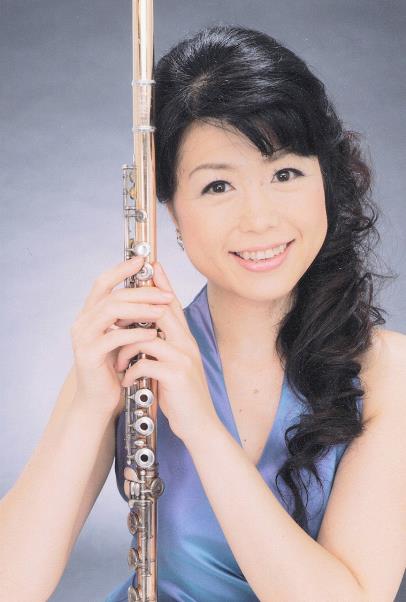
Yuko Hoshi
The NFA, I believe, is an amazing hub of a worldwide flute community where members living outside the U.S., like myself, are given equal opportunities. I have met so many wonderful people from all over the world through the NFA. Come on and join us! Let’s play together!”
Membership With the NFA
Exclusive Member Benefits
- A subscription to The Flutist Quarterly.
- Discounts to SmartMusic Software, Principal Flute, and other partners.
- Unlimited access to Naxos Music Library and Grove Music Online.
.
Membership Options
The NFA welcomes students, student groups, libraries, and commercial members with special membership options.
"I am the NFA"
Our members make us who we are. Meet some of the members of the NFA and see why we inspire flutists and enrich lives.
Events
Browse performances, masterclasses, competitions, and more from the community.
Publications
The Flutist Quarterly
The Flutist Quarterly provides information and articles about the performance, study, history, manufacture, and enjoyment of flutes, flutists, and flute music.
FQ Plus
FQ Plus offers feature articles, interactive features, and news about flute events and people.
Committees

NFA Committees

Jobs & Internships

Donate To The NFA
Support the flute community
Your gifts helps ensure that the NFA continues to provide the highest level of service to its membership. Please consider making a tax-deductible gift to support the NFA’s operations and programs.
In celebration of “125 Years of Exquisite Flutemaking,” the Wm. S. Haynes Co. made a $125,000, 10-year commitment to the National Flute Association, for the years 2013-2022. This was recently extended to last until 2027. Learn more about it here.